Tag: charles koch
As Iran War Raised Gas Prices, Oil Lobby Sent Big Checks To Senate Republicans

As Iran War Raised Gas Prices, Oil Lobby Sent Big Checks To Senate Republicans

The two main groups responsible for electing Republicans to the U.S. Senate have taken large donations from the oil and gas industry.

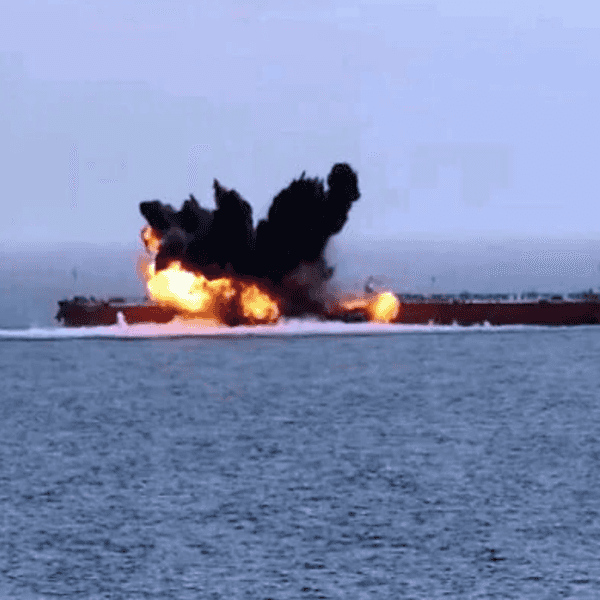
The National Republican Senatorial Committee (NRSC) and the Senate Leadership Fund PAC (SLF) have received a combined $6.83 million this year from oil company PACs, executives, and trade groups, all while fuel prices rose as a result of the war in Iran.

During this same period, Senate Republicans facing reelection repeatedly voted to continue the war, helping sustain the huge profits oil companies were reaping from these higher costs.

“The reason why oil companies are doing so well right now, or at least are projected to do very well in the near term, is exactly because Americans are hurting,” Kelly Mitchell, who leads the oil and gas industry watchdog Fieldnotes, told the Guardian.

Since February, SLF has received $250,000 from Valero, $100,000 from Marquis Energy, and $2 million from Chevron. It also received $1 million from the American Petroleum Institute, the largest trade group representing domestic oil and gas companies.

Chevron is on track to make $9.2 billion from war profits alone this year. Valero’s stock value has jumped by 24% since the conflict began.

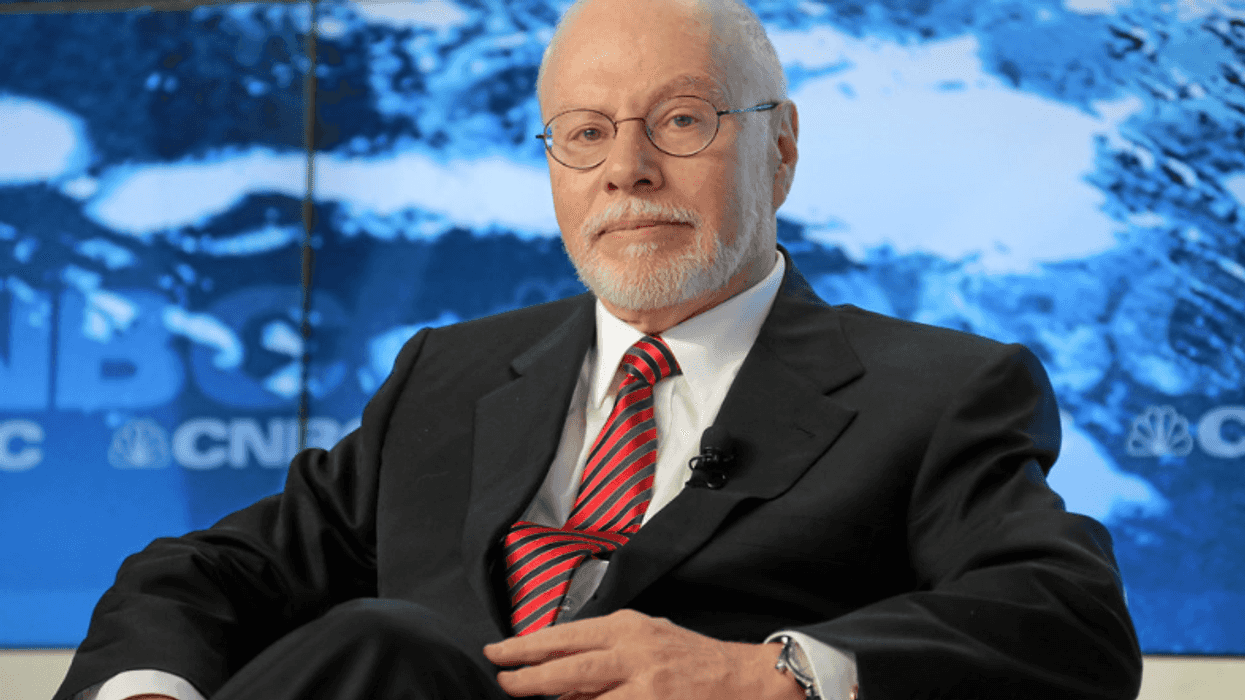
Billionaire Paul Singer personally gave $1.5 million to SLF and $310,000 to the NRSC. Singer’s venture capital firm, Elliott Investment Management, took over Citgo Petroleum earlier this year.

Former Sunoco CEO Sam Susser contributed $75,000 to the NRSC this year. Oil baron Philip Anschutz gave $150,000.

The $6.83 million figure also includes donations from individuals and groups adjacent to the oil and gas industry. Coal billionaire Joe Craft, for example, gave $100,000 to SLF. The value of coal increased as a result of the war’s destabilizing effect on global energy supplies.

“If your goal is domestically produced energy and you’re South Africa or Indonesia or China, coal looks pretty good from an energy security standpoint,” Jason Bordoff, the founding director of the Center on Global Energy Policy, told the New York Times.

Energy Transfer LP, which ships natural gas throughout the world, gave $500,000 to SLF this year. Semafor reported in March that the company will likely continue to profit from the war even after it ceases because of heightened shipping costs and the time needed for the energy supply chain to fully recover.

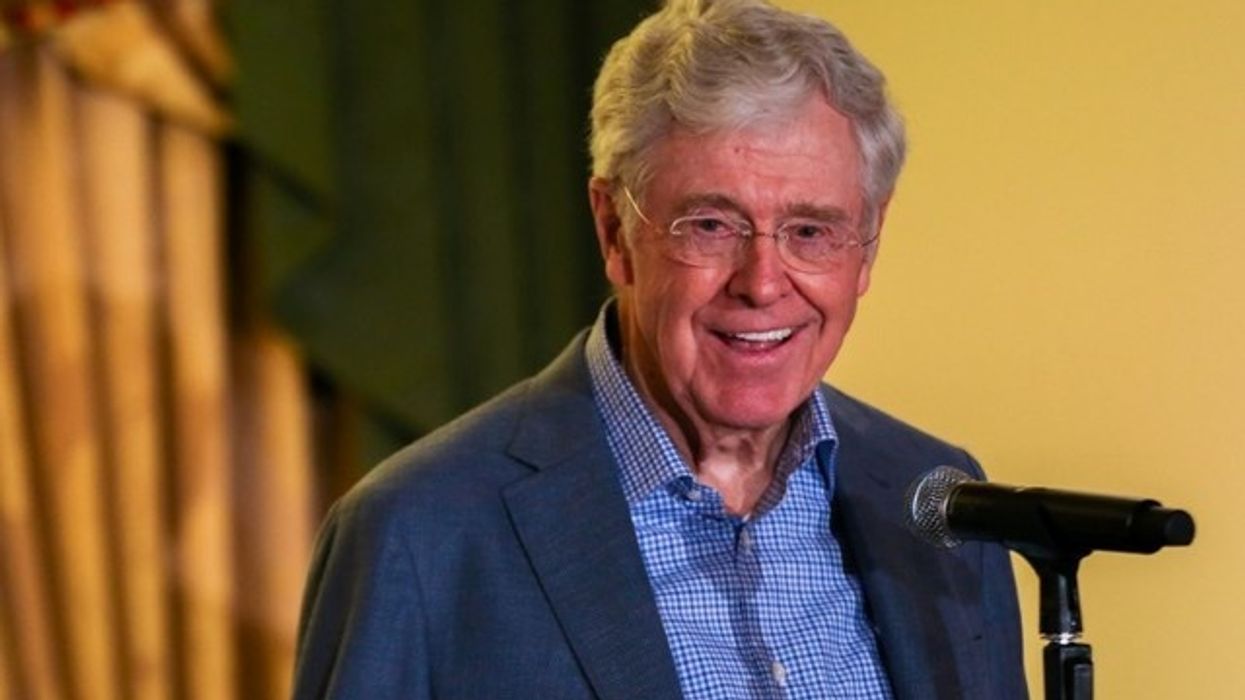
The American Exploration & Production Council, which represents independent oil producers, gave $100,000 to SLF. The group also received $750,000 from Koch Inc., the energy and oil refining conglomerate owned by far-right billionaire Charles Koch.

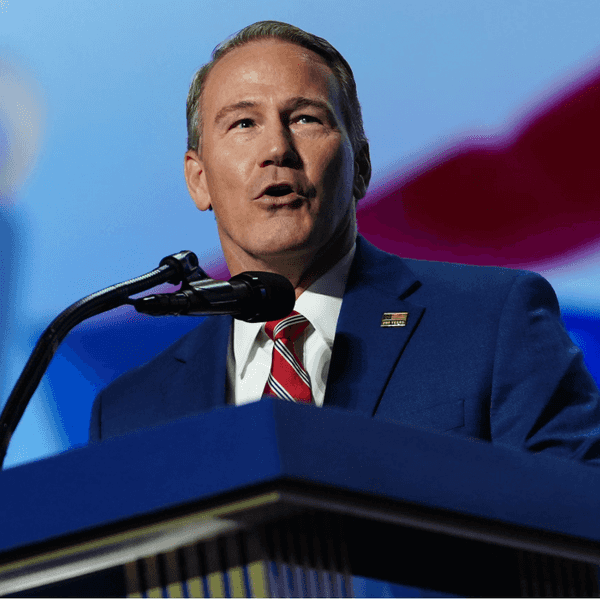
Republican Sens. Dan Sullivan of Alaska, Ashley Moody of Florida, and Jon Husted of Ohio voted eight times to block war powers resolutions that could end the war. Maine Sen. Susan Collins voted to block the resolutions six times.

Republican Reps. Ashley Hinson of Iowa and Mike Collins of Georgia, both of whom are running for the U.S. Senate, voted four times to block the House counterpart of those resolutions.

Collins and North Carolina Republican Michael Whatley have come under scrutiny for substantial oil and gas investments that enable them to personally profit from the war. Former New Hampshire Sen. John Sununu, who is mounting a comeback bid this year, has similar investments and has expressed support for the war.

President Donald Trump announced on June 14 that a ceasefire had been reached with Iran. Details of the agreement, which is expected to be finalized on June 19, have not yet been made public.

Reprinted with permission from American Journal News
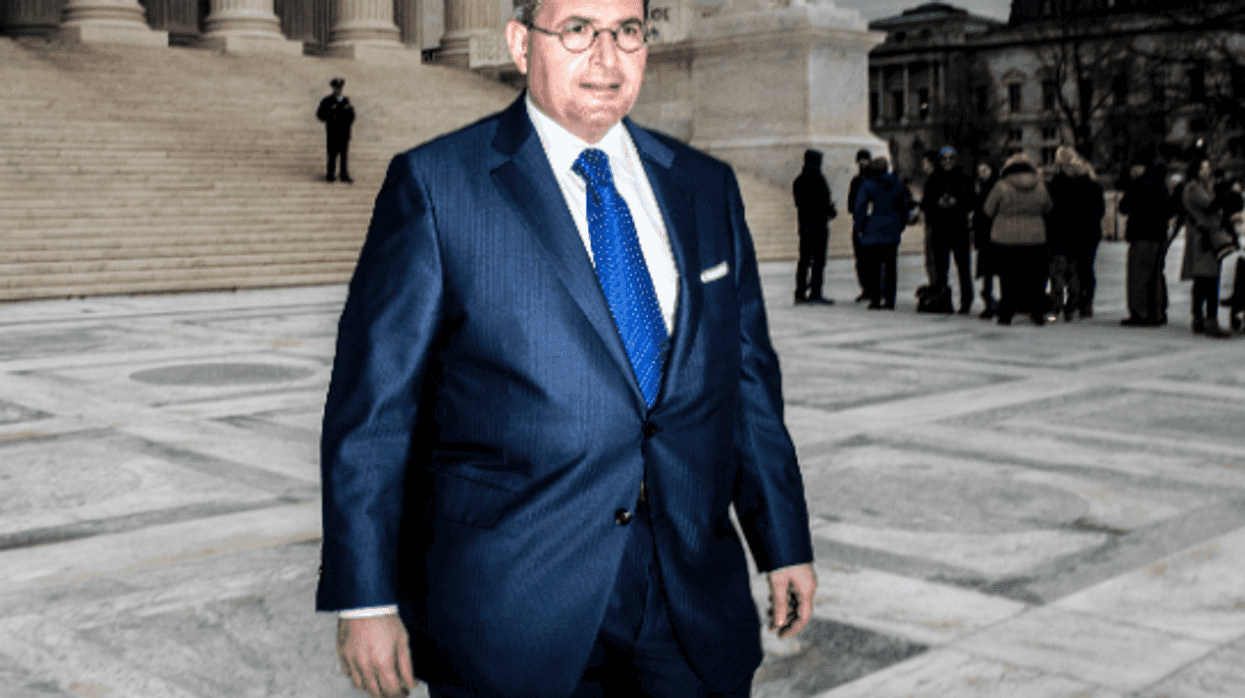
Leonard Leo

Right-Wing Group Linked To Koch And Leo Sues Trump Over Tariffs

President Donald Trump's tariff announcement last week has not only rattled financial markets, but even a group of far-right billionaires who have a history of supporting Republican causes.

The Guardian reported that a far-right group funded by multibillionaire Charles Koch and the Federalist Society's Leonard Leo is now suing to stop Trump's new trade duties on China from taking effect. The New Civil Liberties Alliance argued that Trump's invocation of the International Emergency Economic Powers Act (IEEPA) to justify his unilateral imposition of new tariffs is illegal, and that the courts should intervene based on precedent that requires Congress weigh in on certain policy-related matters.

“This statute authorizes specific emergency actions like imposing sanctions or freezing assets to protect the United States from foreign threats,” the organization stated. “It does not authorize the president to impose tariffs. In its nearly 50-year history, no other president – including President Trump in his first term – has ever tried to use the IEEPA to impose tariffs.”

"His attempt to use the IEEPA this way not only violates the law as written, but it also invites application of the supreme court’s major questions doctrine, which tells courts not to discern policies of ‘vast economic and political significance’ in a law without explicit congressional authorization," the statement continued.

Mark Chenoweth, who is president of the New Civil Liberties Alliance, said that by filing the lawsuit in a Pensacola, Florida court, the judge would have to abide by the aforementioned precedent, or else it would ultimately "transfer core legislative power." And Sen. Rand Paul (R-KY) — who recently voted with Democrats to limit Trump's tariff powers on Canada — opined that his colleagues in the Senate Republican Conference are also likely very uneasy about the president's latest new import taxes,

“They all see the stock market, and they’re all worried about it,” Paul said. “But they are putting on a stiff upper lip to try to act as if nothing’s happening and hoping it goes away.”

The lawsuit also signals an escalation from the various arms of the Koch political machine. His Americans for Prosperity organization threw its weight behind former United Nations Ambassador Nikki Haley in the 2024 Republican presidential primary, only for her to bow out and eventually endorse Trump after Trump won the Super Tuesday primaries.

After this article appeared, a spokesperson for Stand Together contacted The National Memo with the following statement: "Stand Together, a nonprofit funded in part by Charles Koch that has supported NCLA is not involved in this case."


Reprinted with permission from Alternet.

Koch Billionaire Network Secretly Funding Legal Scheme To Gut Government

Koch Billionaire Network Secretly Funding Legal Scheme To Gut Government

Far-right judicial activist Leonard Leo, the force behind the Trump-packed Supreme Court, and billionaire megadonor Charles Koch have combined their networks to back yet another dark-money-fueled effort to gut the federal government. Bloomberg Law has uncovered their involvement in the New Civil Liberties Alliance, “a top US Supreme Court litigator” that’s behind the challenges the court heard last week to the federal government’s power to regulate corporate America.

The group’s purported goal is to protect individual rights from “the administrative state” which they see as “an especially serious threat to constitutional freedoms,” according to the group’s website. You know, that “deep state” that ensures we have clean water to drink and clean air to breathe, that ensures our food is safe to eat and our prescription medications won’t harm us.

Bloomberg notes that while the New Civil Liberties Alliance “identifies as nonpartisan,” it is “backed by groups tied to powerful sources of conservative funding, including billionaire Charles Koch and entities linked to legal activist Leonard Leo, who’s had direct influence over the court’s conservative makeup.”

The group received $2.06 million from Donors Trust Inc., a “community foundation for liberty,” from 2020 to 2022, according to Bloomberg. Donors Trust, in turn, received $175.6 million in those two years from The 85 Fund, yet another Leo group. In the same time period, the 85 Fund was also getting money back from Donors Trust “to help finance various conservative groups,” according to CNBC.

“The 85 Fund, which paid Leo’s public affairs firm CRC Advisors $21.4 million for services in 2022, is led by Carrie Severino, the president of the Judicial Crisis Network, which spent millions on ad campaigns to get Justices Neil Gorsuch, Brett Kavanaugh, and Amy Coney Barrett confirmed to the bench,” Bloomberg reports.

That’s combined with the more than $5 million the New Civil Liberties Alliance has received since its beginning from the Charles Koch Institute and the Charles Koch Foundation. A nonprofit associated with the Koch-backed Americans for Prosperity Foundation, the Cause of Action Institute, filed one of the challenges to federal rule-making, Loper Bright Enterprises v. Raimondo. Cause of Action received $200,000 from Americans for Prosperity in 2022, according to records reviewed by Bloomberg.

This is all much less about individual rights than corporate rights. It’s about giving corporations free rein to gamble with public health and safety, dressed up as “liberty.” The New Civil Liberties Alliance’s efforts extend to bringing upcoming Supreme Court cases that would reverse the criminal ban on bump stocks—accessories that turn semi-automatic weapons into machine guns—and would prevent administration efforts to stop the spread of COVID-19 conspiracy theories and misinformation.

Reprinted with permission from Daily Kos.

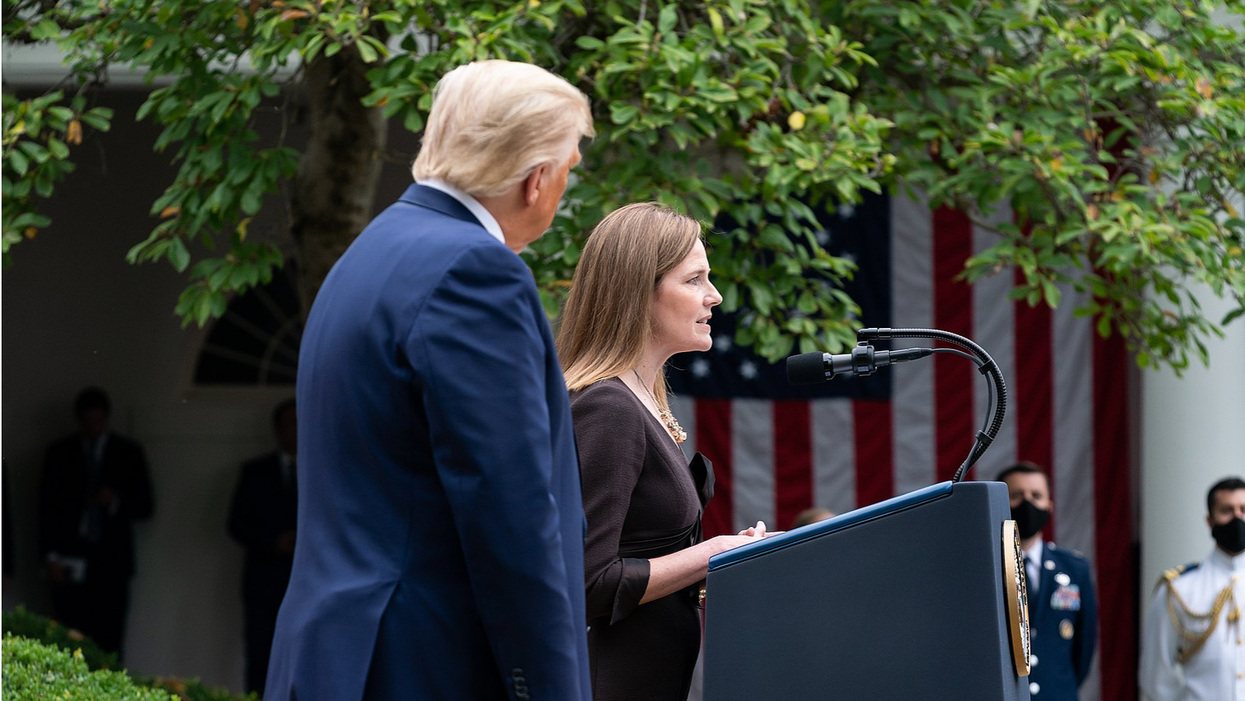
Then Judge Amy Coney Barrett delivers remarks after former President Trump announced her as his nominee for Associate Justice of the Supreme Court of the United States.

Justice Barrett Ignores Ethical Concerns To Hear Koch Outfit's Lawsuit

Reprinted with permission from Alternet

Supreme Court Justice Amy Coney Barrett is facing backlash for her refusal to recuse herself from a case involving the Koch billionaires who spent a substantial amount of money on political ads ahead of her confirmation.

According to Law & Crime, on Monday, April 26, the Supreme Court heard verbal arguments for two cases: Americans for Prosperity Foundation v. Rodriquez and Thomas More Law Center v. Bonta. Both cases center on First Amendment opposition to a California law requiring select non-profit groups to disclose donor information to the U.S. Department of Internal Revenue Service (IRS).

The top petitioner listed in the case is a non-profit organization spearheaded by billionaires David Koch and Charles Koch. When Barrett was nominated for the nation's highest court by former President Donald Trump, the group shelled out more than $1 million to cover the cost of advertisements to amplify Barrett's image.

During an interview with Forbes, Sen. Sheldon Whitehouse (D-RI) expressed concern about the presumed conflict of interest Barrett is treading toward by refusing to recuse herself from the case.

"Justice Barrett is ignoring important ethical standards to rule on a case that could open our democracy to further infiltration by dark-money influence, perhaps permanently," Whitehouse told Forbes. "Her choice to press forward in spite of recusal laws also creates a troubling new precedent, and undermines public confidence in the integrity of the Court."

Whitehouse and other Democratic lawmakers also penned a letter last week to express their concern.

"Statute, constitutional case law, and common sense all would seem to require your recusal from [the case]," Whitehouse, Sen. Richard Blumenthal (D-CT) and Rep. Hank Johnson (D-GA) wrote. "At a minimum, there should be a public explanation as to why you think recusal is not required under federal law, since your participation in the case on these facts would appear to both conflict with 28 U.S.C. § 455 and effectively overturn [relevant case law]. Understanding this determination will also aid Congress in its ongoing consideration of judicial ethics and transparency rules."

"The American people are alarmed about the seemingly dominant influence of special interests on our politics and government," the trio of Democrats continued. "And the [Koch-funded] operation's 'full scale campaign' for your confirmation makes plain that our judiciary is a target of this massive influence apparatus. Now, in AFPF, the Court takes up an important case that squarely implicates the power of big special interests to exercise their influence from behind veils of secrecy."

"We hope you will consider seriously and address publicly the question of recusal in this case," that letter concluded.

Shop our Store

Headlines

Editor's Blog

Trending

World